Nothing was promoted to bounded automation, and that was the result
Where each class of claim-resolution automation landed after the July 2026 experiments - report-only, human-gated, or not promotable, and why.
Expert insights on implementing AI in healthcare workflows, industry trends, and best practices from our team of healthcare AI specialists.

Where each class of claim-resolution automation landed after the July 2026 experiments - report-only, human-gated, or not promotable, and why.

What do you do once a pipeline can propose an answer for every row, but you have no idea how often it is right?

Our constructed pilots looked encouraging. Then we pointed the same ideas at real ledger data, read-only, and learned what the pilots couldn't show us.

In July 2026 we ran three small pilots on claim review.

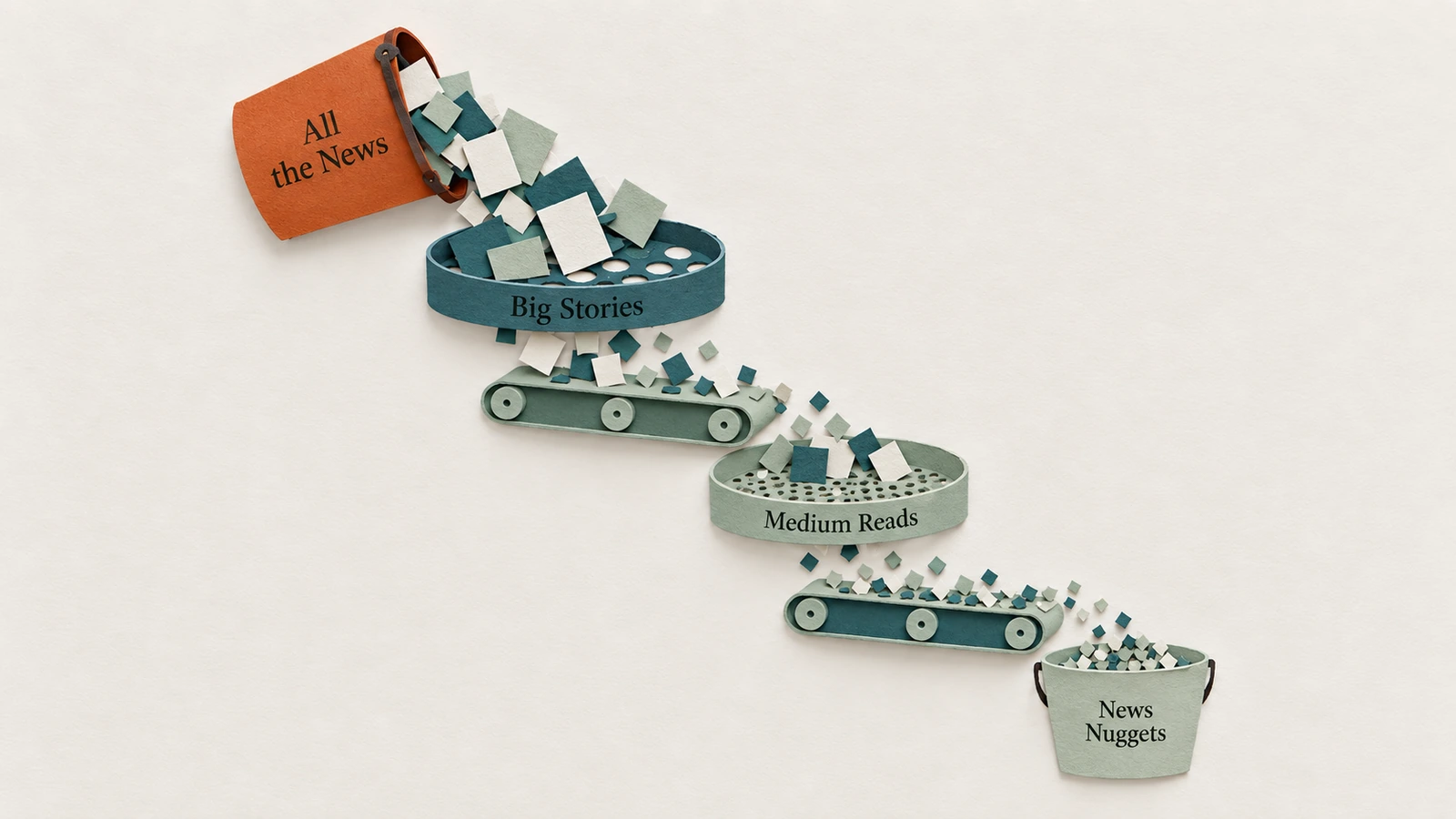
Where should the hard decisions in an AI editorial workflow go, if the writing turns out not to be the hard part?

In May 2026, we found that a claim ledger can look reviewed while its evidence is thin.

How the lower dB weekly digest went from three competing pipelines to one, and why the email that won had a thin pool of sources behind it.

The most durable thing we built for the lower dB weekly digest wasn't a model or a screen. It was a short document that says what a publishable digest is.

Two timed reviews of our weekly digest took 12.5 and 10.19 minutes.

Three blind review rounds, one LLM judge that never changed its mind, and what the gap taught us about editorial standards.

Why the lower dB weekly digest rebuild starts with a set of sources and story candidates, and only then gets any prose.

What do you do when the check that's supposed to catch the mistake is the thing making it?

We ran Brave, Firecrawl, and LangSearch against one week of GLP-1 news for the lower dB digest.

We rewrote a set of GLP-1 articles with a second-generation pipeline and never let it publish a word.

Our weekly digest passed its fact-check and still missed the stories readers needed. Grounded and useful turned out to be two different tests.
How one team generated 79 reviewed visual assets across 20 articles in a single session—using structured prep, style constraints, and programmatic chart generation.
How we built a 13-stage editorial AI pipeline and why the biggest gains came from narrowing boundaries, not writing better prompts.

We had a production app that should have felt quick — straightforward frontend, Convex-backed state, ordinary routes — yet it felt slower than it had any right to feel. That gap between expectation and experience turned out to be the whole story: measurement first, then stripping accidental work from list views, auth, prefetch, and even our benchmarks.

If you search for information about GLP-1 medications right now, you will find a lot of content. The problem is what kind of content you find—and why we built an independent patient-first desk.

If you've built anything with AI agents, you've hit the wall. The real culprit isn't model limitations or rate limits — it's a memory problem. Here's how Manus and OpenAI diagnosed it, and what any builder can do about it today.

Five rounds of optimization on Kinisi's 12-week fitness program pipeline, from multi-minute waits to a 4-second median time to first actionable week.

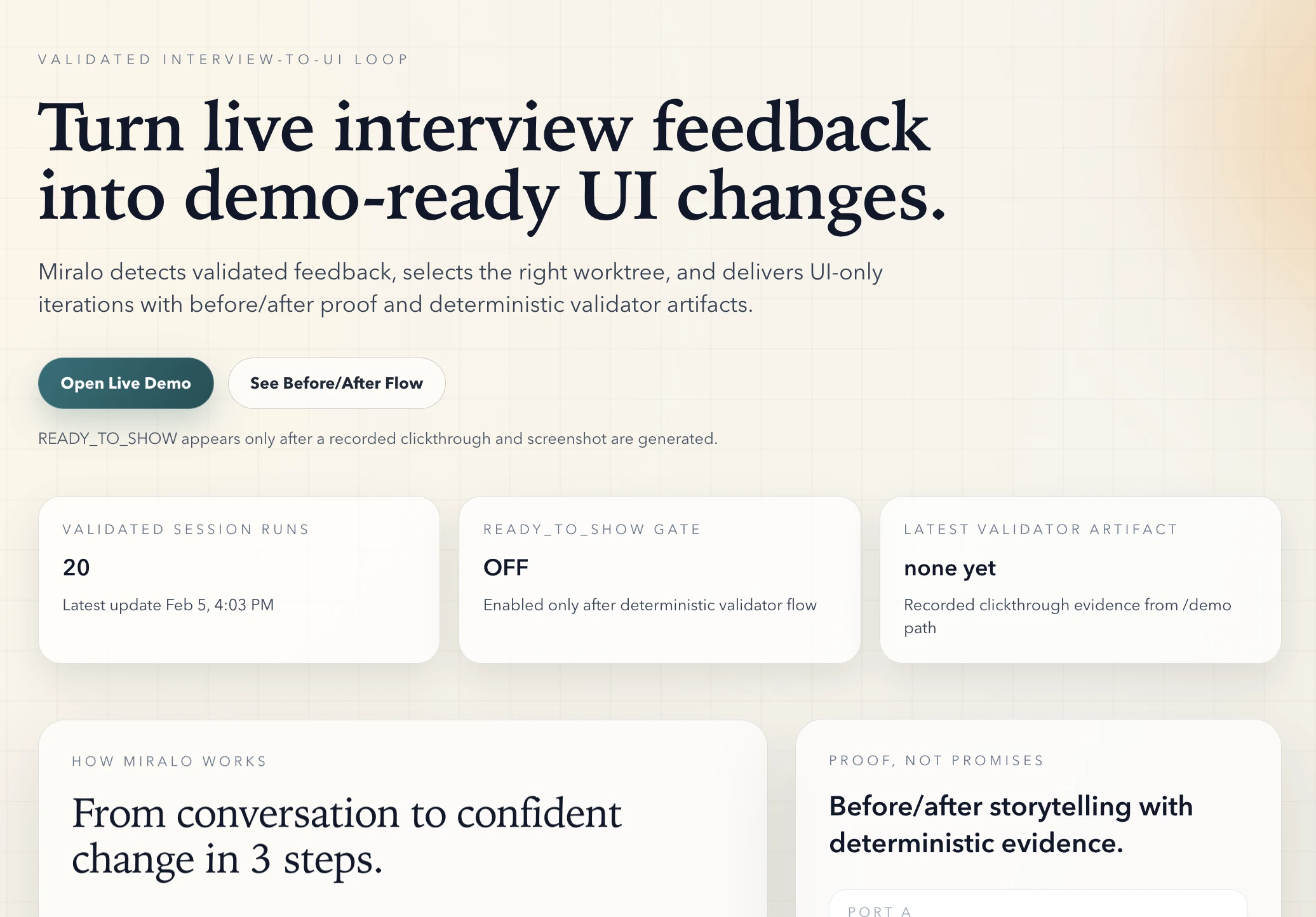
At the OpenAI Codex hackathon, I built Miralo to turn live interview feedback into demo-ready prototype changes in minutes.
Most teams don't fail from lack of talent. They fail from learning too slowly. This is the core problem Corvo Labs exists to solve.

AI video generation has quickly shifted from an academic curiosity to a practical tool. But anyone who’s played with these tools knows something isn’t quite there yet. The missing ingredient isn't prompt engineering—it's context engineering.
Expert insights across key areas of healthcare AI
Planning, assessment, and roadmap development for healthcare AI adoption
Technical guidance, best practices, and lessons learned from real deployments
Industry trends, regulatory updates, and emerging technologies in healthcare
Process improvement, efficiency gains, and practical applications in healthcare